- If you are doing crop rotation, make not of which crops need to go where next spring, it is a good idea to write this down so that you don't forget.
- Also, now is the time to write down which plants did well and which ones did not. This is especially important if you've never gardened before. It will give you and idea of what plants do best on your land, which will make gardening next year a little easier.
- Write down any ideas that crop up about what you want to try out next year.
- If you have perennials that need to be thinned make note of the plants and thin them according to what works best for that specific plant.
- If you have raspberries, once their harvest is over (should be towards the end of the month) they can be pruned. You will want to prune out the old canes so that new ones will have room to grow.
grow plants. play outside. practical living brought to you by red hill general store
Tuesday, August 23, 2011
August in the Garden
It is hard to believe that August is already halfway over. Now is the time to go out into your garden, notebook in hand and access how things went over the summer.
Tuesday, August 16, 2011
Fall Gardening
Many people forget all about their gardens once the main summer growing season is over and the fruits and vegetables have been harvested. But you should know that fall is a great time to grow things in your garden! Plants like cabbage, broccoli, mustard, turnips, kale, and more can be grown in the fall months.
You will want to prepare your soil for your fall garden, especially if it is in the same spot that you had your summer garden in, you can do this by adding aged manure or compost, or if you prefer, chemical fertilizers. Keeping the soil moist is a biggie for a fall garden, one way to help with this is to plant fall plants in a shallow trench and to regularly irrigate the soil.
Or if you choose, you can do a simple container garden for your fall vegetables. One thing that I have found that is great for growing things in is big washtubs with holes drilled in the bottom. Add a 2-3 inch layer of gravel or rock in the bottom before adding your dirt, to allow water to pass through, otherwise your soil can stay too moist and cause the plants' roots to rot. There are some very colorful cabbages that would make a lovely looking container garden, so that you can enjoy the beauty of nature while waiting for your bounty to ripen enough for eating.
What kind of fall gardening will you be doing?
You will want to prepare your soil for your fall garden, especially if it is in the same spot that you had your summer garden in, you can do this by adding aged manure or compost, or if you prefer, chemical fertilizers. Keeping the soil moist is a biggie for a fall garden, one way to help with this is to plant fall plants in a shallow trench and to regularly irrigate the soil.
Or if you choose, you can do a simple container garden for your fall vegetables. One thing that I have found that is great for growing things in is big washtubs with holes drilled in the bottom. Add a 2-3 inch layer of gravel or rock in the bottom before adding your dirt, to allow water to pass through, otherwise your soil can stay too moist and cause the plants' roots to rot. There are some very colorful cabbages that would make a lovely looking container garden, so that you can enjoy the beauty of nature while waiting for your bounty to ripen enough for eating.
What kind of fall gardening will you be doing?
Wednesday, August 3, 2011
Harvest Time
Many of you have already been harvesting a lot of different fruits and vegetables. And, if you are like me, you know nothing can beat the taste of fresh produce. But what do you do with it all? There are many methods to preserving your foods. From waterbath canning your high-acid foods, pressure canning your low-acid foods, drying, to freezing. Each method is a great way to make sure your produce lasts longer, so that you can enjoy the fruit of your labors on into the winter.
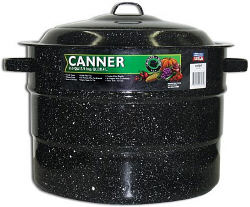
Waterbath canning is a great way to preserve fruits, jams, jellies, preserves, and more! You just need to know if your food is right for waterbath canning (There are a lot of books about canning out there to help with this), a waterbath canner, canning jars, lids, rings, and other canning tools.
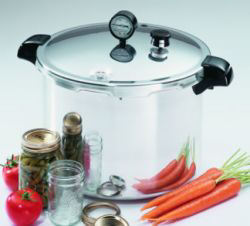
Pressure canning uses a lot of the same types of tools that waterbath canning does, but instead of using a water bath canner you will be using a pressure canner.
Drying your foods is something that has been done for a very long time. However, the methods and efficiency has changed a bit over the years thanks to dehydrators. Now drying food is much quicker than it was in the old days when they dried their foods in smoke or in the sun.
Freezing is definitely a quick way to preserve foods. But you have to worry about air getting to them and causing freezer burn. This can be remedied with a FoodSaver, which vacuum seals food before you put it in the freezer, cutting down on spoilage and freezer burn.
What is your favorite way to preserve your hard worked for harvest goodies?
Want to read more? Check out this blog: Urban Gardens & Pressure Cooking
Waterbath canning is a great way to preserve fruits, jams, jellies, preserves, and more! You just need to know if your food is right for waterbath canning (There are a lot of books about canning out there to help with this), a waterbath canner, canning jars, lids, rings, and other canning tools.
Pressure canning uses a lot of the same types of tools that waterbath canning does, but instead of using a water bath canner you will be using a pressure canner.
Drying your foods is something that has been done for a very long time. However, the methods and efficiency has changed a bit over the years thanks to dehydrators. Now drying food is much quicker than it was in the old days when they dried their foods in smoke or in the sun.
Freezing is definitely a quick way to preserve foods. But you have to worry about air getting to them and causing freezer burn. This can be remedied with a FoodSaver, which vacuum seals food before you put it in the freezer, cutting down on spoilage and freezer burn.
What is your favorite way to preserve your hard worked for harvest goodies?
Want to read more? Check out this blog: Urban Gardens & Pressure Cooking
Monday, June 27, 2011
Buckets from Bucket Outlet - Red Hill General Store
The Real Farmwives of America have been blogging about our buckets from Bucket-Outlet.com
Here is a list of the blogs taken from their website:
DeeDee from Sig....nature Notes gathered fresh cut flowers in her Bucket.
Katie from Pinke Post shows off the Barley Harvest in North Dakota and used her bucket as a centerpiece.
Gal in the Middle gets her nephews to water her flowers with her bucket.
Jen From Mess Hall to Bistro got creative and painted her bucket with chalkboard paint.
Lana used her bucket to chill a bottle of wine on Walking the Off-Beaten Path.
Ott, A is ready to bob for apples with her tub on a Latte with Ott, A
Goodeness Gracious what are they using that bucket for?!?! (You'll have to go see it to believe it.)
3 Kids & Lots of Pigs packed sandwhiches in their bucket before heading out to VBS, Swim Lessons and all their other busy summer activities.
Amy from 2 Maids a Milking Loves Buckets and used her new tub to serve fruit out of.
Four Ransoms kids use their bucket to cool off!
Or you could store bug spray and sun screen in it so you can quickly grab it on your way out the door for summer activities like Leah from Beyer Beware.
Whose the Grown Up, used her bucket for Kitchen utensils. (Isn't that cute?!?!)
Have Cat's? Check out how Alarm Clock Wars feeds hers.
Also you can win:
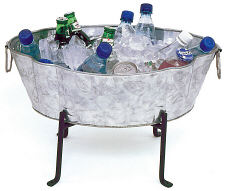
This galvanized embossed tub. (Stand not included)
For more information on how to win visit: http://www.realfarmwivesofamerica.com/2011/06/buckets-of-fun-for-farmwives-and-you.html
Also, we were pleasantly surprised to find that we were mentioned in The Enchanted Tree's Blog. Thank you!
Monday, June 20, 2011
First Time Container Garden Update
Well our gardener has not been having much luck with her container garden as she has reported to us here at Red Hill General Store. First thing she noticed was just 2 days after planting her peppers the leaves started looking like this:
After doing a little research, she decided to try spraying her peppers with a soapy spray, she used a bit of liquid dish soap, a dab of garlic powder (since she didn't have any fresh garlic cloves), and water.
She mixed all these ingredients her spray bottle and went out to spray her plants before going to bed. Thus far she has not noticed anymore holes in her pepper leaves. If this plan works, she is going to mix a bigger batch and try it in a small pump sprayer.
Unfortunately this was not the only problem that she's had with her container garden. The next problem she is currently working on is figuring out what keeps digging her plants up in the middle of the night and laying them out unharmed on her patio. She has had to replant 4 times already and this is affecting her plants growth. They have not grown hardly any, and Crystal believes that this is due to being constantly dug up. She's hoping to concoct something around her container that will keep whatever is doing this away. She's just not sure if her plants will survive being dug up a 5th or 6th time.
Wonder if she'll catch whatever or whoever is doing this digging in the act?
First Container Garden Posting.
After doing a little research, she decided to try spraying her peppers with a soapy spray, she used a bit of liquid dish soap, a dab of garlic powder (since she didn't have any fresh garlic cloves), and water.
She mixed all these ingredients her spray bottle and went out to spray her plants before going to bed. Thus far she has not noticed anymore holes in her pepper leaves. If this plan works, she is going to mix a bigger batch and try it in a small pump sprayer.
Unfortunately this was not the only problem that she's had with her container garden. The next problem she is currently working on is figuring out what keeps digging her plants up in the middle of the night and laying them out unharmed on her patio. She has had to replant 4 times already and this is affecting her plants growth. They have not grown hardly any, and Crystal believes that this is due to being constantly dug up. She's hoping to concoct something around her container that will keep whatever is doing this away. She's just not sure if her plants will survive being dug up a 5th or 6th time.
Wonder if she'll catch whatever or whoever is doing this digging in the act?
First Container Garden Posting.
Friday, June 17, 2011
Companion Planting with Marigolds
There are many plant companion settings. Plants that help one another out by promoting healthier growth, warding off certain pests, and helping keep the soil's pH at a healthy level for the plants around them. Today we are going to talk a little about using marigolds as companion plants:
Marigolds are more than just a pretty flower to keep around the home in flower boxes. They also make a great companion plant for most plants, although they can be a little rough on tender herbs. Marigolds produce a pesticide that deters nematodes, with some types of marigold this pesticide can stay in the soil for a year or longer even after the marigold itself is gone. marigolds also deter beetles, beet leaf hoppers, and more.
What experiences have you had in planting and/or using Marigolds in and around your garden?
Marigolds are more than just a pretty flower to keep around the home in flower boxes. They also make a great companion plant for most plants, although they can be a little rough on tender herbs. Marigolds produce a pesticide that deters nematodes, with some types of marigold this pesticide can stay in the soil for a year or longer even after the marigold itself is gone. marigolds also deter beetles, beet leaf hoppers, and more.
When planting companion plants together, keep in mind that even plants that help one another in other climates, soil conditions, etc. don't always get along, as we post about companion plants, be sure to always know that each garden will vary slightly from another and what works for some may not work in your garden.
What experiences have you had in planting and/or using Marigolds in and around your garden?
Thursday, June 16, 2011
Companion Planting with Beans
There are many plant companion settings. Plants that help one another out by promoting healthier growth, warding off certain pests, and helping keep the soil's pH at a healthy level for the plants around them. Today we are going to talk a little about using beans as companion plants:
What experiences have you had in planting and/or growing beans?
Beans are a great companion for many different plants, just a few are strawberries, beets (view companion planting with beets), carrots, brassicas, radish, and corn. Beans repel California beetles and they fix nitrogen in soil, which is a fertilizer that other plants depend on.
When you harvest beans you might want to keep a basket or large bucket on hand as during good seasons bean plants can grow up to 50 beans per plant.
When planting companion plants together, keep in mind that even plants that help one another in other climates, soil conditions, etc. don't always get along, as we post about companion plants, be sure to always know that each garden will vary slightly from another and what works for some may not work in your garden.
What experiences have you had in planting and/or growing beans?
Subscribe to:
Posts (Atom)