- Allium Companion Planting
- Bean Companion Planting
- Beet Companion Planting
- Borage Companion Planting
- Carrot Companion Planting
- Cucumber Companion Planting
- Geranium Companion Planting
- Lettuce Companion Planting
- Marigold Companion Planting
- More Bean Companion Planting
- Onion Companion Planting
- Pea Companion Planting
- Pepper, Hot Companion Planting
- Pepper, Sweet Companion Planting
- Squash and Zucchini Companion Planting
- Tomato Companion Planting
- Brassica Companion Planting
- Potato Companion Planting
- Radish Companion Planting
- Corn Companion Planting
- Sunflower Companion Planting
- Strawberry Companion Planting
- Grape Companion Planting
- More Tomato Companion Planting
grow plants. play outside. practical living brought to you by red hill general store
Showing posts with label companion planting. Show all posts
Wednesday, April 24, 2013
Collection of Companion Planting Guides
Since the beginning of our gardening blog, we have created a large collection of companion planting guides on various vegetable and fruit plants. To help you filter through all of our blogs to find them we are listing them all here with links to the articles:
Thursday, January 31, 2013
More Tomato Companion Planting Info
We've discussed companion planting with tomatoes in the past. But with the huge amount of traffic that blog has received, we've decided to look at this topic in more depth.
Tomatoes are one of the most popular plants in gardens, so it is natural that so many people are interested in the plants that they grow best with.
Asparagus: Tomatoes are a friend of asparagus. They help to protect asparagus from asparagus beetles by releasing solanine and attracting natural predators of the asparagus beetle. A chemical derived from asparagus juice has been found effective on tomato plants as a nematode killer,, including the root-knot sting, stubby root and meadow varieties.
Basil: Improves growth and flavor of tomatoes.
Tomatoes are one of the most popular plants in gardens, so it is natural that so many people are interested in the plants that they grow best with.
Asparagus: Tomatoes are a friend of asparagus. They help to protect asparagus from asparagus beetles by releasing solanine and attracting natural predators of the asparagus beetle. A chemical derived from asparagus juice has been found effective on tomato plants as a nematode killer,, including the root-knot sting, stubby root and meadow varieties.
Basil: Improves growth and flavor of tomatoes.
Bee Balm: Like basil, it helps to improve the growth and flavor of tomatoes. It also helps attracts beneficial insects like bees.
Borage: Helps to deter tomato hornworms. Also attracts bees. When planted near tomatoes it helps to promote growth and disease resistance.
Carrots: These share space well with the tomato. Carrots can be planted while the tomatoes are still small and are usually ready for harvest by the time the tomato plants start to take over all the space.
Celery: Grows well with tomatoes.
Chives: Improves growth and flavor of tomatoes. Helps to deter some insects and pest.
French Marigold: Helps to dispel white flies.
Garlic: Can be used as a spray to help control late blight on tomatoes also helps to prevent red spiders.
Geranium: Repels Japanese beetles.
Horehound: Stimulates and aids fruiting of tomatoes.
Mint: Improves tomato health and deters ants, rodents, flea beetles, fleas, and aphids.
Nasturtium: Deters aphids, whiteflies, and pests of the cucurbit family. Attracts predatory insects.
Onions: Get along with tomatoes when planted together.
Parsley: Adds vigor to tomato plants. Attracts hoverflies and parasitic wasps.
Peas: Gets along with tomatoes when planted together.
Peppers, Bell: Does well when planted near tomatoes.
Petunias: Helps repel pests.
Poached Egg Plant: Attracts hoverflies.
Do not plant the following near tomatoes:
Brassicas, Corn, Fennel, Kohlrabi, Potatoes
Tomatoes like to grow in the same place year after year unlike other plants. They also make a great container plant, there are special tomato planters made just for planting tomatoes in containers.If planting tomatoes in the garden, you will want tomato stakes to help stabilize the plants as they get large and heavy.
Nasturtium: Deters aphids, whiteflies, and pests of the cucurbit family. Attracts predatory insects.
Onions: Get along with tomatoes when planted together.
Parsley: Adds vigor to tomato plants. Attracts hoverflies and parasitic wasps.
Peas: Gets along with tomatoes when planted together.
Peppers, Bell: Does well when planted near tomatoes.
Petunias: Helps repel pests.
Poached Egg Plant: Attracts hoverflies.
Do not plant the following near tomatoes:
Brassicas, Corn, Fennel, Kohlrabi, Potatoes
Tomatoes like to grow in the same place year after year unlike other plants. They also make a great container plant, there are special tomato planters made just for planting tomatoes in containers.If planting tomatoes in the garden, you will want tomato stakes to help stabilize the plants as they get large and heavy.
Thursday, December 27, 2012
Companion Planting with Grapes
Grapes do well when planted near hyssop, geraniums, clover, basil, beans, oregano, peas, blackberries, garlic, chives, rosemary, tansy, and mint. You should avoid planting cabbage and/or radishes near where grapes are.
Grapes are grown for many reasons, two of those reasons being for juice and/or wine. Be sure to check out our wine presses if you are growing grapes for these reasons.
Monday, December 17, 2012
Companion Planting with Strawberries
Strawberries are a great container plant, (try growing them in a metal wash tub sometime) but they also work as a companion plant. Suggested companions for strawberries are:
Borage
Bush Beans
Caraway
Lupin
Lettuce
Onions
Spinach
Thyme
The borage helps to strengthen the strawberry against insects while the thyme deters worms. Lupin helps to attract honey bees.
When companion planting with the strawberry be sure to avoid cabbage and plants that are in the cabbage family.
Thursday, November 29, 2012
Companion Planting with Sunflowers
Sunflowers are quite beneficial to nearly any garden, especially those with aphid problems. If you plant sunflowers in your garden you will notice the ants moving the aphids onto them. Sunflowers are hardy enough that they can survive the aphids and keep them distracted from your other plants.
Sunflowers also attract hummingbirds, this is beneficial not only for the pollination of your garden but also because hummingbirds eat white flies.
Sunflowers can also provide shading to plants that do not need as much sunlight or are easily blighted by the sun.
If your sunflowers are not helping control your insects in your garden as much as you would like, use a garden sprayer to spray your organic pesticide onto your plants.
Wednesday, November 21, 2012
Companion Planting with Corn
Corn is one of the original companion plants since it is a member of the planting method known as the Three Sisters.
The Three Sisters is a combo of plants that includes: corn, beans, and squash. The corn acts as a pole for the beans to climb up and the beans provide nitrogen to the soil for the corn and squash. The squash covers the ground helping to keep moisture in the soil.
But those aren't the only companions for corn.
Amaranth, beans, cucumber, white geranium, lamb's quarters, melons, morning glory, parsley, peanuts, peas, potatoes, pumpkins, soybeans, squash, and sunflower are also companion plants for corn.
When growing corn you should keep in mind:
What are your tips for growing corn?
The Three Sisters is a combo of plants that includes: corn, beans, and squash. The corn acts as a pole for the beans to climb up and the beans provide nitrogen to the soil for the corn and squash. The squash covers the ground helping to keep moisture in the soil.
But those aren't the only companions for corn.
Amaranth, beans, cucumber, white geranium, lamb's quarters, melons, morning glory, parsley, peanuts, peas, potatoes, pumpkins, soybeans, squash, and sunflower are also companion plants for corn.
When growing corn you should keep in mind:
- Corn needs nitrogen rich soil.
- If planting rows they need to be at least 3 feet apart
- Corn needs 1 inch of water a week
What are your tips for growing corn?
Tuesday, November 13, 2012
Radish Companion Planting
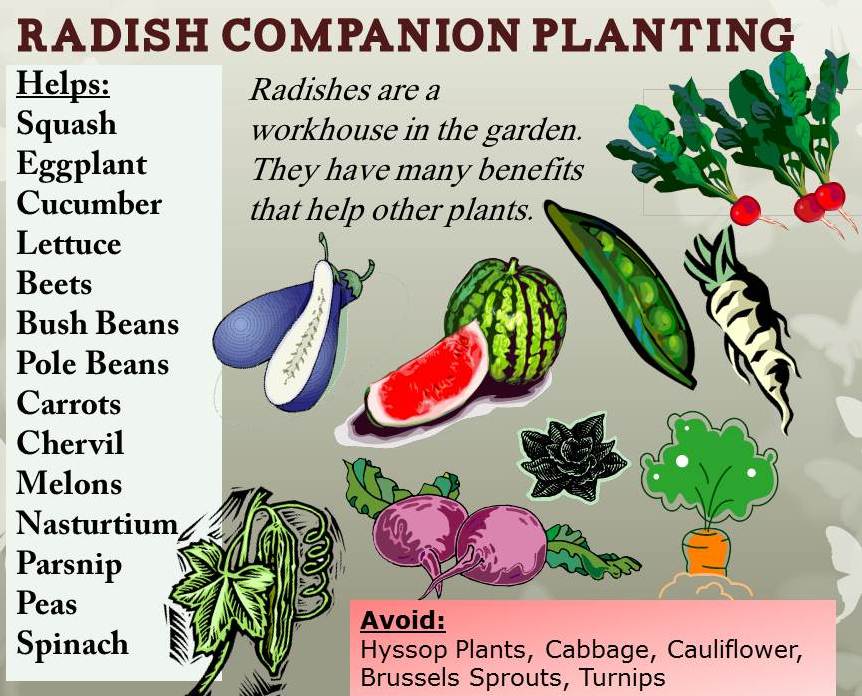
Radishes make great companions for radish, beet, bush beans, pole beans, carrots, chervil, cucumber, lettuce, melons, nasturtium, parsnip, peas, spinach, and squash.
Radishes can help to deter cucumber beetles and rust flies.
They can help protect squash from squash borers.
Radishes can also help corn by fighting corn borers, but you must let the radishes go to seed.
Radishes also lure leafminers away from spinach plants. The leafminers will damage radish leaves, but this does not stop the radish roots from growing.
Radishes also make great container plants. So if you only have room for some flower boxes, you can still grow radishes.
Friday, October 26, 2012
Companion Planting with Potatoes
There are many plant companion settings. Plants that help one another
out by promoting healthier growth, warding off certain pests, and
helping keep the soil's pH at a healthy level for the plants around
them. Let's look at the Potato's best companion plants:
The potato is helped the most by the horseradish plant. Horseradish helps to increase the disease resistance of the potato plant. Beans, cabbage, and corn help the potato to grow better. The Colorado potato beetle is repelled by tansy, nasturtium, coriander, and catnip.
Potatoes are a great food to grow in your garden as they complement nearly any meal that you can think of. They also make great plants to grow in small amounts of space. There is a guide on growing 100 lbs of potatoes in just 4 square feet of space at: http://tipnut.com/grow-potatoes/ be sure you have a large harvest basket if growing this many potatoes!
The potato is helped the most by the horseradish plant. Horseradish helps to increase the disease resistance of the potato plant. Beans, cabbage, and corn help the potato to grow better. The Colorado potato beetle is repelled by tansy, nasturtium, coriander, and catnip.
Potatoes are a great food to grow in your garden as they complement nearly any meal that you can think of. They also make great plants to grow in small amounts of space. There is a guide on growing 100 lbs of potatoes in just 4 square feet of space at: http://tipnut.com/grow-potatoes/ be sure you have a large harvest basket if growing this many potatoes!
Thursday, October 18, 2012
Companion Guide for Brassicas
There are many plant companion settings. Plants that help one another
out by promoting healthier growth, warding off certain pests, and
helping keep the soil's pH at a healthy level for the plants around
them. Let's look at Brassicas as companion plants:
For those that are not familiar with the Brassica plant family, these plants include broccoli, Brussels sprouts, cabbage, cauliflower, and kohlrabi. These plants repel wireworms which make them a great companion for potatoes, corn, wheat, and other cereal plants.
The plants that help the brassica family are alliums, borage, dill, geraniums, nasturtium, and rosemary. When planting your brassicas be sure to avoid planting them near anything from the nightshade family (tomatoes, peppers) or any mustards.
A tip on when and how to plant brassicas from Outreach Outdoors: Plant turnips, rape, and/or radishes 60-90 days before your first frost, or mid to late July in the Midwest. Plant kale and swedes 150-200 days before your first frost or in late April here in the Midwest. Be aware that some kales will have a much shorter growing season, thus a much later planting date. Conventional planters, no-till drills, or broadcasting seed can all work. Seed should be planted at 1/8 – 1/4 inch deep. Till the soil, firm the seed bed with a cultipacker or by driving an ATV over the plot, broadcast (or drill seed) and repack.
If you are going to be broadcasting you may want to look into the Earthway line of Broadcast Spreaders.
When planting companion plants together, keep in mind that even plants that help one another in other climates, soil conditions, etc. don't always get along, as we post about companion plants, be sure to always know that each garden will vary slightly from another and what works for some may not work in your garden.
For those that are not familiar with the Brassica plant family, these plants include broccoli, Brussels sprouts, cabbage, cauliflower, and kohlrabi. These plants repel wireworms which make them a great companion for potatoes, corn, wheat, and other cereal plants.
The plants that help the brassica family are alliums, borage, dill, geraniums, nasturtium, and rosemary. When planting your brassicas be sure to avoid planting them near anything from the nightshade family (tomatoes, peppers) or any mustards.
A tip on when and how to plant brassicas from Outreach Outdoors: Plant turnips, rape, and/or radishes 60-90 days before your first frost, or mid to late July in the Midwest. Plant kale and swedes 150-200 days before your first frost or in late April here in the Midwest. Be aware that some kales will have a much shorter growing season, thus a much later planting date. Conventional planters, no-till drills, or broadcasting seed can all work. Seed should be planted at 1/8 – 1/4 inch deep. Till the soil, firm the seed bed with a cultipacker or by driving an ATV over the plot, broadcast (or drill seed) and repack.
If you are going to be broadcasting you may want to look into the Earthway line of Broadcast Spreaders.
When planting companion plants together, keep in mind that even plants that help one another in other climates, soil conditions, etc. don't always get along, as we post about companion plants, be sure to always know that each garden will vary slightly from another and what works for some may not work in your garden.
Tuesday, April 24, 2012
Companion Planting Guides
Over the past year, we have created several companion planting blogs here. We have decided since they are all spread out amongst the site, that we wanted to create a link list for you in order to make them easier to find:
- Allium Companion Planting
- Bean Companion Planting
- Beet Companion Planting
- Borage Companion Planting
- Carrot Companion Planting
- Cucumber Companion Planting
- Geranium Companion Planting
- Lettuce Companion Planting
- Marigold Companion Planting
- More Bean Companion Planting
- Onion Companion Planting
- Pea Companion Planting
- Pepper, Hot Companion Planting
- Pepper, Sweet Companion Planting
- Squash and Zucchini Companion Planting
- Tomato Companion Planting
Thursday, March 22, 2012
Companion Planting with Peas
Peas are a great addition to any garden, they taste wonderful cooked, or in salads, they are also a great addition to soups. A wonderful little vegetable. So what plants will your peas thrive by or help by being planting near them?
Beans
Carrots
Celery
Corn
Cucumbers
Eggplant
Peppers
Radishes
Spinach
Tomatoes
Turnips
Just don't plant those precious little peas next to:
Onion
Garlic
Leeks
Shallots
So once you've grown and harvested your pea pods the fun of shelling them begins. Many people still shell peas by hand, but some people use a pea sheller to help in the process, just make sure you don't run unripe or overripe peas through them or you'll end up with mashed peas.
Thursday, March 15, 2012
Companion Planting with Lettuce
Lettuce is a staple in many gardens, no summer salad is complete without it. To help your lettuce be its best in your garden you should plant it near radish, kohlrabi, carrots, or beans. Mint can also be helpful if planted near your lettuce as it helps to repel slugs.
When harvesting your lettuce if it is not head lettuce, cut it off just above the stem (sometimes this will encourage the lettuce to grow more leaves). If it is head lettuce then you should cut it just above the ground.
For harvesting, sometimes harvest baskets make things simpler, as they give you a great way to carry your fresh produce easily into your home.
Thursday, March 8, 2012
Companion Planting with Hot Peppers
Hot Peppers are great companion plants to a lot of other plants, especially in areas of your garden where you have trouble with root rot and Fusarium diseases. The hot pepper's root helps to get rid of those types of problems. But for plants that help the hot pepper, you need to look at plants like the tomato, green pepper, and okra. These types of plants help to shade your hot peppers, keeping them from drying out and helping keep some humidity for them. Many hot peppers will need to be planted together also as they fare better while growing.
Plants to avoid planting near your hot peppers: beans, broccoli, brussels sprouts, caulifllower, cabbage, and/or fennel.
Remember when harvesting and preparing hot peppers to wear gardening gloves or other protective gloves, as some peppers are hot enough to burn your skin, and you also do not want to wipe near your eyes with the juice and oils from the peppers on your hands.
Thursday, March 1, 2012
Companion Planting with Onions
Many people enjoy onions, whether on burgers, sandwiches, in soups, salads, or just plain, they are definitely a great little way to add a little spice to a meal. So it would make sense to plant them smartly in your garden by planting them near plants that either benefit them or that they benefit.
Onions repel and/or distract aphids, carrot flies, and other garden pests. They are very useful in a garden, but shouldn't be planted near beans, lentils, peas, or parsley.
After cutting an onion you can keep it fresh longer using an onion saver container.
Wednesday, February 22, 2012
Companion Plants for Summer Squash & Zucchini
It can be difficult to find companion plants for the zucchini and squash, as these two plants take up a lot of room and are big eaters. There are three plants that can be beneficial to the squash and zucchini when planted together in your garden:
Nasturtiums: these little edible flowers are a trap crop for certain insects such as flea beetles and aphids. If these types of pests are giving you problems in your garden then you may want to consider planting nasturtiums around your squash and zucchini as a border plant.
Beans: beans release quite a bit of nitrogen into the soil, which can make them beneficial to the heavy eaters squash and zucchini. However since they tend to be a running crop also, you will want to train them to grow up trellises or poles in order to plant them with the squash and zucchini.
Corn: this plant grows well with squash and zucchini as it grows up while they grow out. Also the squash and zucchini will benefit the corn by shading the ground and preventing weeds that tend to choke out corn from growing.
Another note: Nasturtiums are a great addition to salads, they have a sharp peppery taste. When you harvest your nasturtiums you will want to pick or cut the flowers and leaves as needed. Floral shears make easy work of harvesting nasturtiums.
Tuesday, February 14, 2012
Carrott Companion Planting
Carrots have a few plants that will help to benefit them during their growth. Beans provide nitrogen that carrots tend to need more than other vegetables do. Sage, Rosemary, and Radishes are under controversy as some recommend them as companions for carrots (they help repel the carrot fly) but other sources list them as incompatible.Alliums also help to confuse the carrot fly. If you are using carrots to attract beneficial insects to your garden then you will need to allow them to flower or plant Queen Anne's Lace (a wild carrot) in your garden. Flax is believed to help carrots since it produces an oil that is thought to protect root vegetables like carrots from some pests.
Debating planting with Beans as a companion? Visit: Bean Companion Planting and Companion Planting with Beans.
How you preserve your carrots is up to you, but many are pickling more different types of vegetables. And the carrot has not been left out. So get out your mason jars and check out this recipe for pickled carrots.
Monday, February 6, 2012
Companion Planting with Beans 2
After our original post on Companion Planting with Beans we learned a little bit more about plants that should not be planted with beans, etc. So here is our new Companion Planting with Beans image:
When harvesting your beans you may want to have a harvesting basket on hand. Hope this helps you with your summer gardening!
Friday, January 27, 2012
Companion Planting with Sweet Peppers
Sweet peppers have a few companion plants that will help them in the growing season.
Basil: this plant helps sweet peppers by repelling flies and mosquitoes and also by promoting growth and flavor of the peppers.
Parsley: attracts the beneficial parasitic wasps and hover-flies that help the sweet pepper stay healthy.
Okra: this plant shades the peppers from being burned by the sun and also helps to keep wind off the fragile stems.
Avoid planting sweet peppers near fennel, kohlrabi, and apricot trees.
When harvesting, it is best to cut peppers off using pruning shears, rather than breaking the stem.
Thursday, January 19, 2012
Cucumber Companion Planting
Thinking about your 2012 summer garden? Are you planning on planting some cucumbers? If so you should keep the best companions for cucumbers in mind.
These cucumber companion plants consist of:
Radishes, Peas, Beets, Corn, Beans, Carrots, Dill, and Sunflowers.
However, you should not plant your cucumbers near potatoes or sage as they tend to grow poorly when planted next to these plants.
When growing cucumbers, you might want to consider using a trellis with them as most cucumber plants are vines and the trellis gives them the space they need to climb.
Most people like to pickle their cucumbers for storage, there are many pickling mixes on the market to help you do this if that is how you wish to store your cucumbers.
What are your cucumber growing recommendations?
First time garden? Read: Starting a Garden.
Wednesday, January 11, 2012
Companion Plants for Tomatoes
It is still a little early to actually do any gardening, but winter is a great time to reflect on how you want your garden to look, and what you want your garden to grow. Companion planting is a great way to allow plants to do their best while benefiting one another during the growing season.
Since tomatoes are a very popular plant in gardens, we will start our companion planting series by discussing different plants that complement tomatoes.
These plants help the tomato in a myriad of different ways. Each has its unique benefit to the tomato.
Basil attracts butterflies and repels other pests.
Oregano repels aphids.
Carrots attract insects beneficial to the garden particularly the tomato. (See more Carrot Companions)
Onions/Chives repel pests.
Many of the companion plants help by repelling pests, however, if you still have pest problems in your garden you can use sprays (chemical or organic) in a garden sprayer to help keep your plants pest free.
Subscribe to:
Posts (Atom)